
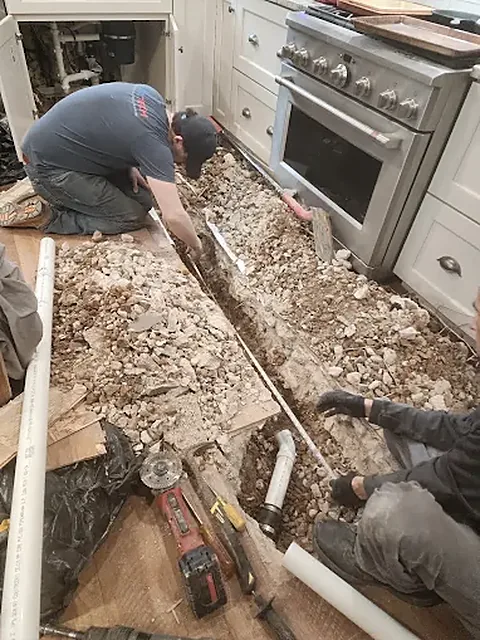
Three ways to fix a slab leak
Spot repair
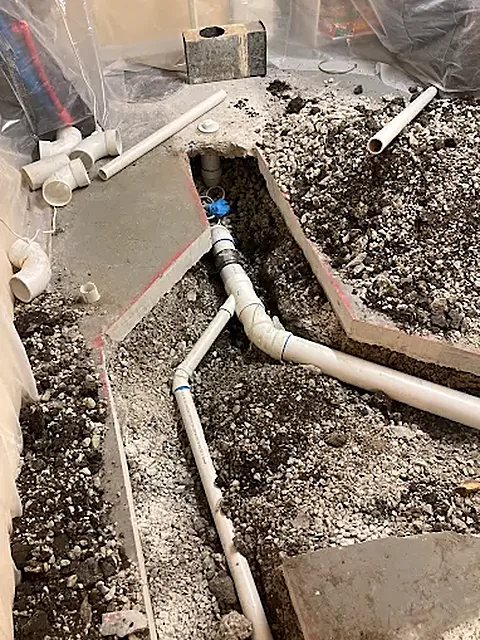
We open the floor at the leak, cut out the bad section and join new pipe in. Good for a single leak on a line that is otherwise in fair shape.
Reroute
We abandon the leaking line under the slab and run a new one through the attic and walls. No jackhammer in the living room, and the new line is easy to reach later.
Repipe
When a home has had two or three slab leaks, the rest of the copper is usually close behind. Replacing the water lines stops the cycle.
Signs of a slab leak
- A warm spot on the floor, often near the kitchen or a bathroom
- Water bill climbing month after month
- Cracks in tile or flooring that feel damp
- Water heater running more than usual
- Sound of water under the floor at night
What happens after the repair
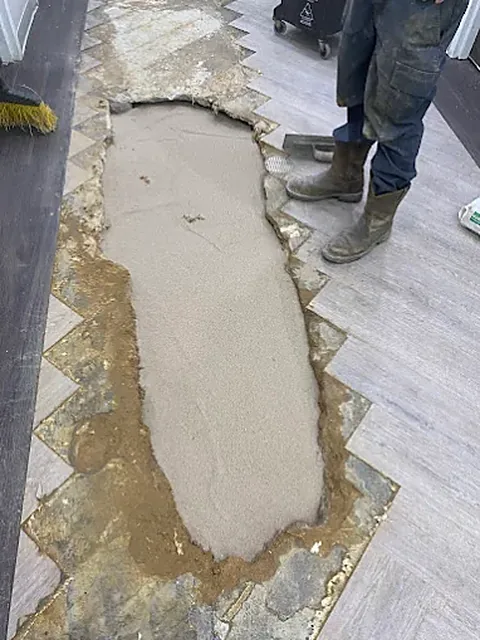
If the floor had to be opened, we fill and patch the concrete so the area is ready for your flooring. We pressure-test the system before we leave so you know the line holds.
We also check the rest of the system pressure. High house pressure is one of the main reasons slab leaks come back, and a pressure regulator is an easy fix.
Slab Leak Repair questions
Is a reroute better than a spot repair?
It depends on the age of the pipe and where the leak is. A reroute avoids breaking the floor and moves the line where it can be reached, so many Gilbert homeowners choose it. We explain both before you decide.
How long does a slab leak repair take?
Most spot repairs and reroutes are finished the same day or the next day. Larger repipes take a few days.
Will my flooring be ruined?
We only open the floor where the leak is. Tile can often be saved around the opening, and we patch the concrete so your flooring installer can finish it.